
The Clepsydra
Why Technology Doesn’t Change Culture

In the late fifth century B.C., an elderly Athenian hobbled up the stone steps of the law court at the foot of the Acropolis. He had been dragged into a lawsuit by a younger rival and dreaded what awaited him. Aristophanes, writing in The Acharnians, captured this dread. The old man complains that he will be “destroyed at the clepsydra,” the water‑clock. It was not the facts of the case that frightened him, but the clock—an unremarkable clay vessel whose controlled stream of water measured out each speaker’s time.
The promise of the water‑clock
Athens’ democracy was cacophonous. Any male citizen could bring a complaint, and speeches in court sometimes rambled for hours. To bring order, the Athenians turned to technology. Archaeologists have recovered a pot from a rubbish‑filled well near the Tholos in the Agora. It has a spout near the base and an overflow hole near the rim. Scholars identified it as a clepsydra, the water‑clock used in the courts. When filled to the same level each time, the vessel’s contents poured out at a constant rate through the bronze‑lined spout, giving each litigant a precisely measured allotment of time.
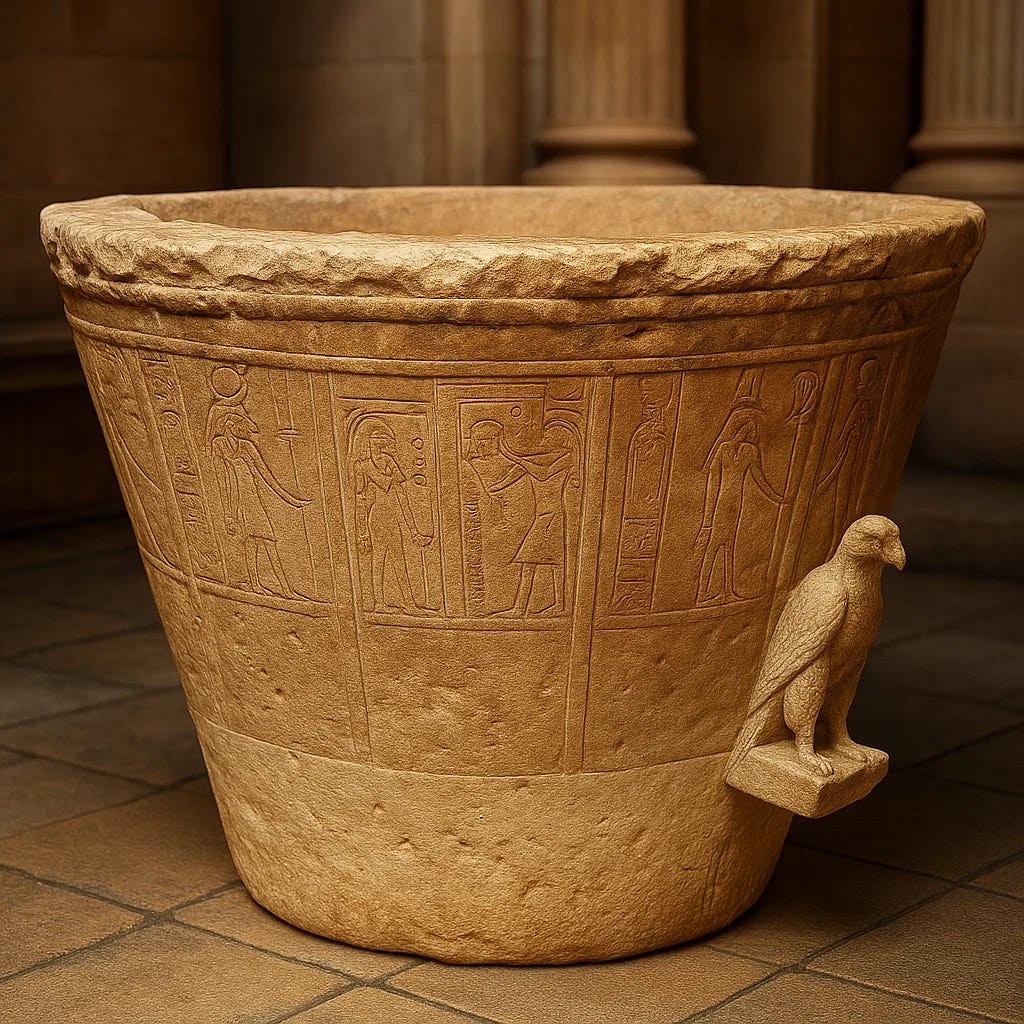
The device’s purpose was explicit. As a popular blog on horology explains, the clepsydra let prosecutors and defendants “have an equal say in the court” and its use was almost sacred because of its role in ensuring fairness. A special official called the ephedrion tou hudatos filled and emptied the pot, and the water flow stopped when laws were read or witnesses called. The mechanism itself was ingenious for its simplicity. But ingenuity is not the same as fairness.
Rhetoric versus the clock
Despite the timekeeping gadgetry, Athenian trials were hardly paragons of fairness. Comedians lampooned jurors obsessing over their water clocks; Aristophanes’ Wasps depicts a juror who stays awake at night fretting about the clepsydra. The orators quickly turned the clock to their own ends. Lysias, the logographer, joked that “not even if there were twice as much water would it be enough” to expose his opponent’s schemes. Isocrates complained that there was too little time to teach jurors the truth because lawyers were “persuaders rather than mentors”. Demosthenes boasted that he could make his opponent seem virtuous within the time limit of a single pot of water.
In other words, the technology didn’t fix the culture. The clepsydra promised order, but human nature—ambition, charm, anxiety, and the urge to game any system—remained stubbornly the same. The water clock gave each speaker a measured slice of time; it could not make them use it well or stop them from bending the rules. Instead of eliminating inequality, it created a new theatre of competition: who could pack more persuasion into one pot of water? That observation is central to the article you are reading now. Across history, breakthroughs have changed tools and environments, but they rarely change us.
From clay to digital: the modern raise‑hand
Fast‑forward twenty‑five centuries to a modern office. A team of engineers meets on Zoom. To avoid interrupting one another, participants click a small “raise hand” button. When activated, a hand icon appears next to the participant’s name, and the host can call on them in order. Guides to the feature explain that it “keeps meetings organized and ensures your voice is heard at the right time”. Like the clepsydra, the digital hand promises fairness: everyone gets a chance, no one can dominate.
“Culture is culture: whether we pour water or click an icon, the underlying dynamics of hierarchy, attention and respect persist.”
Yet anyone who has sat in a virtual meeting knows how easily personalities overwhelm protocols. People speak out of turn; hosts ignore raised hands; side chats proliferate; some participants never click the button at all. The hand icon is just another mechanism we can use—or misuse. A computer doesn’t stop a manager from talking twice as long as their subordinate or a colleague from monologuing during Q&A. Culture is culture: whether we pour water or click an icon, the underlying dynamics of hierarchy, attention and respect persist. Technology may coordinate our interactions, but it does not teach us to listen.
Our ancient minds, our modern toys
Why does technology so often fail to deliver the deep transformation its inventors promise? Anthropologists offer one explanation: we have not changed much since we became human. Excavations at Blombos Cave and Sibudu Cave in South Africa have unearthed pigments, engraved ostrich shells and shell beads more than 70,000 years old. These artifacts push the origins of symbolic thinking back at least 70,000 years; many researchers now believe that modern cognition was already in place when Homo sapiens emerged. In other words, the capacity for language, art, planning and deception—the software that runs our culture—was already present tens of thousands of years before agriculture or metallurgy. Even the anthropologist Adolf Bastian argued in 1860 that all human societies share a set of “elementary ideas” or Elementargedanken. Different cultures produce their own “folk ideas,” but the cognitive building blocks are the same.
“We have not changed much since we became human…” —April Nowell, PhD. Paleolithic Archaeology, Professor of Anthropology Victoria University
Viewed through this lens, it is less surprising that our ancestors’ concerns mirror our own. The Talmud deliberates about jealousy and fairness. Greek philosophers debate work–life balance. Ancient epics worry about communication failures and rumors. We fret about Slack etiquette and Zoom fatigue, but the underlying struggles—how to be heard without shouting, how to divide time fairly, how to balance self‑interest and community—have accompanied us for millennia.
Efficiency without enlightenment
This continuity does not mean technology is useless. It improves efficiency. Agriculture allowed us to feed more people. Washing machines liberated hours of domestic labor. Airplanes shrank continents. The clepsydra let Athenian courts try more cases per day; Zoom lets us hold meetings across time zones. But efficiency is not the same as transformation. A dishwasher does not teach someone to appreciate their partner; e‑mail does not teach us empathy; AI that drafts sentences does not eliminate writer’s block.
Our faith in technical fixes is understandable. When we face messy human problems—unfairness, miscommunication, overwork—we hope a new app, device or algorithm will resolve them. In the mid‑19th century, the telegraph shrunk communication time from weeks to minutes; some predicted it would end misunderstandings and wars. Instead, it accelerated the spread of gossip and panic. Today, generative AI promises to free us from drudgery, yet it may just amplify our existing biases and create new distractions. Tools magnify what is already there.
Chop wood, carry water
There is an old Buddhist saying: “Before enlightenment, chop wood, carry water. After enlightenment, chop wood, carry water.” The meaning is that even profound insight does not free us from daily tasks. Technology may lighten the load, but it cannot replace the work of being human: listening patiently, speaking with care, moderating our desires, being generous. Cultural change happens when people practice different behaviors, not when a new device lands on the market.
“Before enlightenment, chop wood, carry water. After enlightenment, chop wood, carry water.”—Zen Kōan
Does this mean we should reject innovation? Of course not. The clepsydra and the “raise hand” feature solved real problems—timekeeping and turn‑taking—and we are better off with them. But we should temper our expectations. The next tool will not suddenly make us better listeners, more just judges or more mindful parents. To change culture, we must change ourselves. That work happens in the mundane rhythms of life: how we speak to a colleague on Zoom, whether we give our partner our undivided attention, how we treat the person who disagrees with us in court or at a town meeting. Innovations can support those efforts, but they cannot substitute for them.
Thanks it was very interesting reading!